The Context

The current economic growth model, based on the intensive use of fossil fuels, is developing without considering the ecological limits of our natural environment. Territories are adapting to global change, assuming that the terrestrial ecosystem and its resources are finite and affected by the accelerated impacts of climate change.

We find ourselves physically and emotionally disconnected from raw materials and energy.

Furthermore, current conservation policies for natural areas cannot be effective tools for sustainable forest resource management without real integration between management, the market, and society. This is where the concept of a “bioregion” comes into play—a geographical area whose boundaries have not been established by administration, but by nature itself. This bioregion encompasses a set of watersheds that share similar ecosystem and natural resource characteristics.

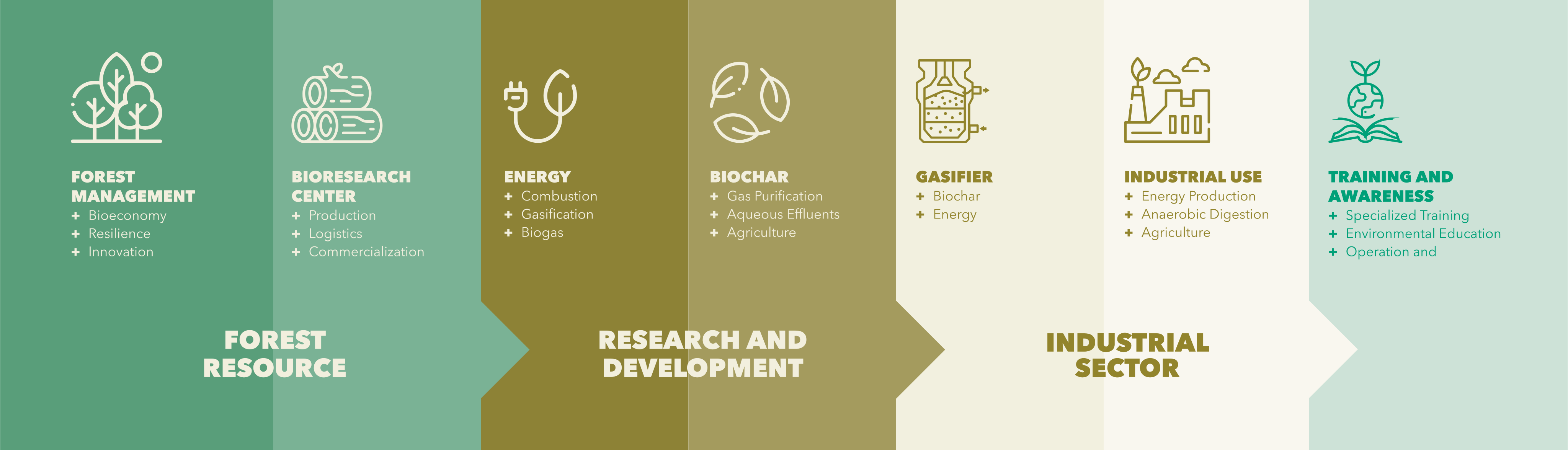
Bioforin is a strategic project aimed at establishing a bioregional management model for forest resources. Management is oriented to boost the regional bioeconomy and strengthen climate resilience through research and development of new high-value bioproducts. Thus, Bioforin promotes a more sustainable and efficient economy based on biological and natural resources.

Bioforin aims to help reduce dependence on fossil fuels and move towards the decarbonization of the economy, aligning with global sustainability goals.
Objectives

Engage relevant stakeholders in the forest sector, promote participation in the bioregional strategy, and ensure efficient forest resource management for better biomass valorization. Encourage sustainable forest use at a regional scale, applying climate resilience criteria to adapt to global change challenges.

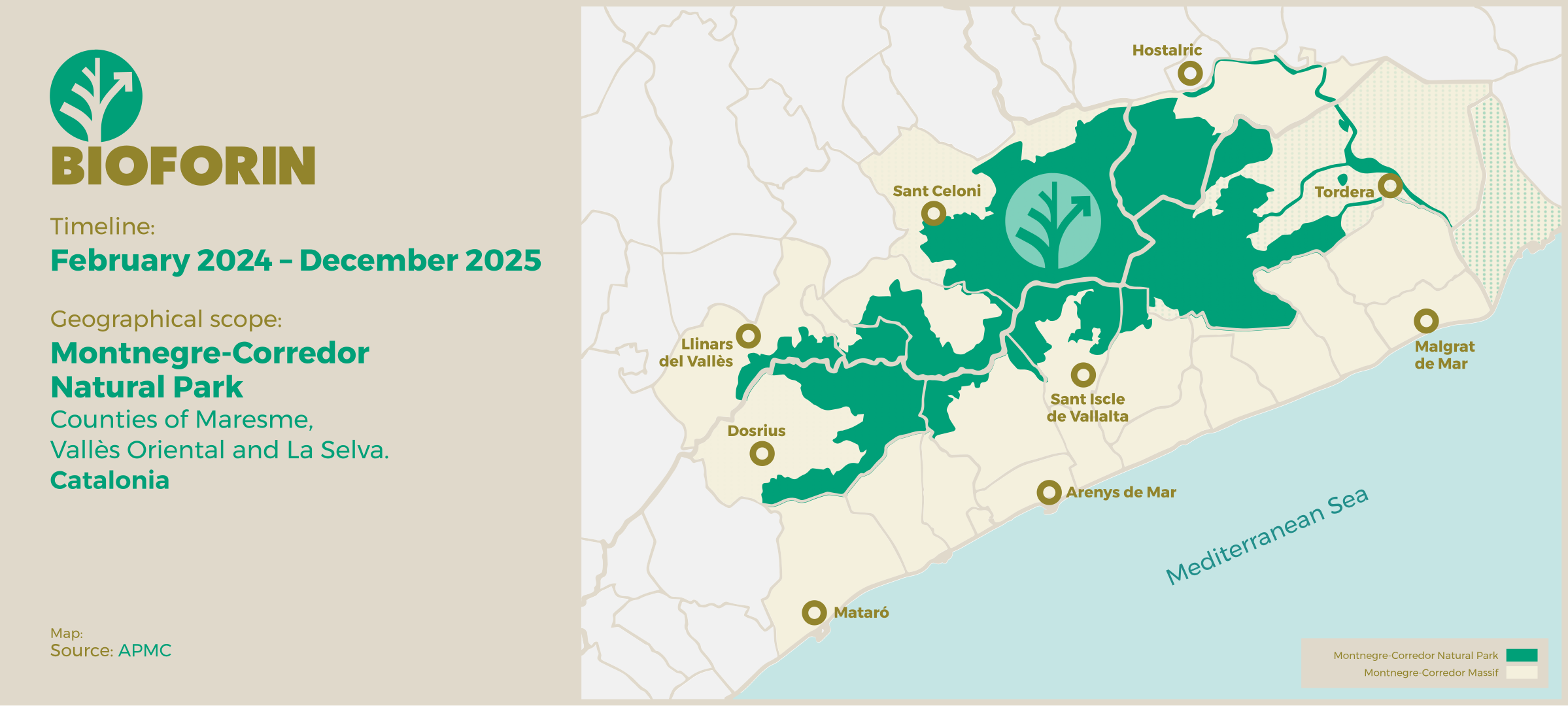
Assess potential and viability of forest biomass use in the Montnegre-Corredor park, located in the Serralada de Marina of the mountainous regions of Barcelona, to ensure sustainable resource extraction and the generation of high-value-added products.

Implement innovative forest management to promote bioeconomy and climate resilience in Mediterranean forests, aiming to improve their ecological and economic value in the medium term.

Create a network of bioresource centers for the production of various higher-value-added products, improving production efficiency, logistics, marketing, and creating new markets.

Assess technical feasibility for forest biomass use in various processes focused on renewable energy production. Specifically, technologies for direct combustion, gasification, and biogas production from raw or unprocessed biomass byproducts will be evaluated.

Assess sustainable applications of gasification and pyrolysis products in geographically relevant contexts (Biochar as a biogas purification filter, treatment of aqueous effluents, biochar in agriculture, biochar in composting and anaerobic digestion processes).

Develop a specific training plan for forest foremen based on interpreting technical criteria, mechanization of tasks, ICT integration, and implementing systems for calculating and controlling ecosystem services, ensuring technical feasibility and good practices in project activities.

Develop an environmental communication plan to bring society closer to forests, creating a new forest and bioregional management culture. It will include aspects such as biodiversity-oriented forest management, climate change adaptation, and promoting the role of bioeconomy in forest ecosystems.

Evaluate and share project results, to consolidate the bioregional management and bioeconomy model, ensuring sustainable and resilient forest management while valorizing new bioproducts and innovative applications. Additionally, to allow other regions to benefit from the bioregional management model, project replication and transferability will be promoted to catalyze an inclusive economic, political, and social initiative.

Actions

B1

Bioregional Management

Promote a sustainable bioregional strategy model for forest resource management, based on the utilization of available biomass and promoting efficient management that reconciles the needs of the natural and socio-economic environments.
Actions:

B1.1.
Analysis of key stakeholders and relevant actors for the Bioregional Governance Table representation.

B1.2.
Creation of a Bioregional Strategy Governance Table.

B1.3.
Mapping and pre-design of bioresource centers under the bioregional model.
Doc. RB1.3

B2

Sustainable Forest Resources

Assess the potential and viability of forest biomass utilization in the mountainous forests of Barcelona’s regions to ensure sustainable harvesting and possible uses that guarantee the generation of high-value-added products.
Actions:

B2.1.
Inventory of available forest biomass.
Doc. RB2.1

B2.2.
Definition of forest management models.
Doc. RB2.2

B2.3.
Theoretical roadmap for bioproduct management.
Doc. RB2.3

B2.4.
Initial characterization of forest products and other environmental matrices of interest.
Doc. RB2.4

C1

Forest Management

Implement innovative forest management in the Montnegre and Corredor massif to adapt forests to climate change and improve their ecological and economic value in the long term.
Actions:

C1.1.
Delimitation and characterization of areas to be managed.

C1.2.
Application of innovative adaptive forest management models.

C1.3.
Mapping and pre-design of bioresource centers under the bioregional model.

C1.4.
Improvement and optimization of forest actions through a forest App.

C1.5.
Evaluation of forest management in the provision of ecosystem services and climate change adaptation.

C2

Infrastructure Plan

Creation of a network of bioresource centers for the production of high-value-added products, improving production efficiency, logistics, marketing, and creating new markets.
Actions:

C2. Bioresource Center

C2.1.
Design of the bioresource center.
Doc. C2.1

C2.2.
Implementation of the bioresource center.

C2.3.
Study of economic feasibility.

C2.4.
Preparation of bioresource consumption points.

C3

Technologies to Valorize Forest Resources

Assess the technical feasibility of using forest biomass in various processes, such as direct combustion, gasification, and biogas production from raw or unprocessed biomass, focusing on obtaining renewable energy.
Actions:

C3.1.
Direct combustion: energy performance and analysis of gases produced by type of forest resources.

C3.2.
Pretreatment of forest biomass aimed at enhancing its valorization through anaerobic digestion.

C3.3.
Thermochemical processes for the valorization of forest resources.

C4

Valorization of Pyrolysis and Gasification Products

Evaluate sustainable applications of gasification and pyrolysis products in relevant geographic contexts.
Actions:

C4. Bioresource Center

C4.1.
Biochar as a filter for biogas purification.

C4.2.
Treatment of aqueous effluents.

C4.3.
Applicability of biochar in agriculture.

C4.4.
Theoretical study of biochar use in composting and anaerobic digestion.

C5

Training Plan

Develop specific training for foremen, adapted to current sector needs.
Actions:

C5.1.
Collection of existing regulated training.
Doc. C5.1

C5.2.
Design of the program and content of the specialty training.

C5.3.
Implementation of the specialty training.

C5.4.
Registration of the regulated training with the Catalonia Employment Service.

C5.5.
Creation of an active professional online training platform.

C6

Communication, Dissemination and Awareness

Communicate, promote, disseminate and share project knowledge, as well as raise awareness and facilitate future implementation, exploitation of results, and replication in other territories.
Actions:

C6.1.
Development of the Communication Plan.
Doc. C6.1

C6.2.
Editing of outreach materials.

C6.3.
Preparation of a bioregional management model guide.

C6.4.
Promotion days for bioeconomy targeting the industrial sector.

C7

Environmental Education Plan

Bring society closer to forests and create a new forest culture and bioregional management awareness.
Actions:

C7.1.
Development of the environmental plan.
Doc. C7.1

Didactic Unit

C7.2.
Design of educational panels.

C7.3.
Environmental education activities.

C7.4.
Promotion and citizen participation days.

D1

Project Exploitation and Replication

Consolidate the bioregional management and bioeconomy model as an opportunity for sustainable and resilient forest management, and promote its replication.
Actions:

D1.1.
Exploitation plan.

D1.2.
Replication plan.